
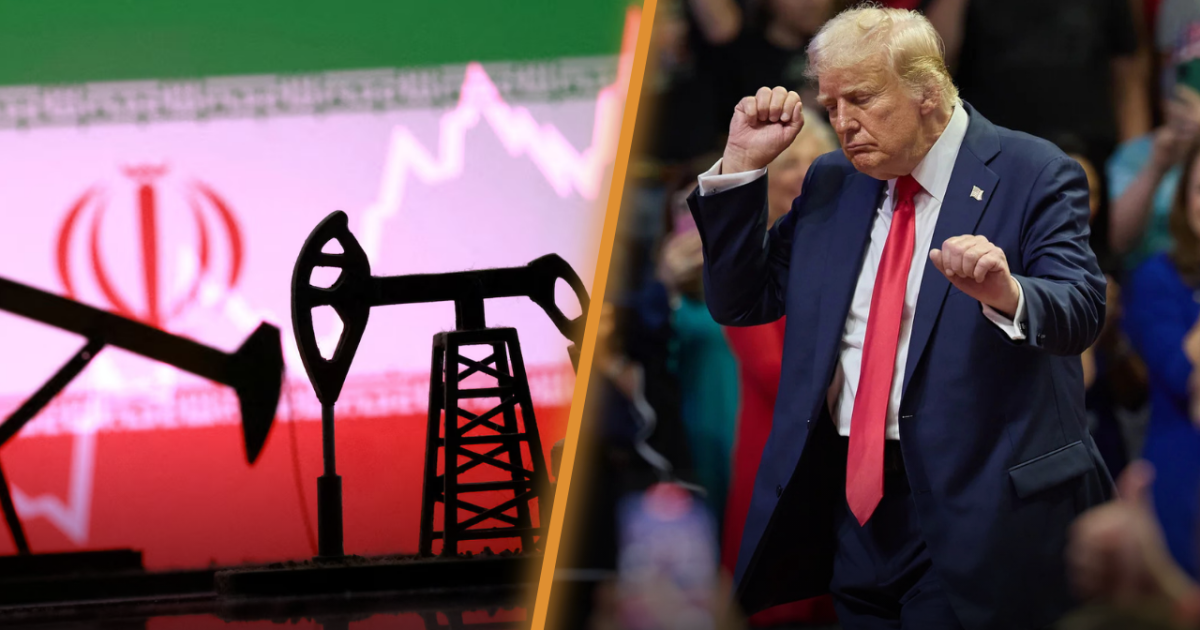
WATCH: Why the Iran Crisis Will NOT Trigger a Major Oil Price Shock
On this episode of The Patriot Perspective, we broke down one of the biggest economic and geopolitical questions in the world right now: whether the conflict with Iran will send oil prices soaring or whether the recent spikes are more temporary than many people think.
The discussion began with a basic point that much of the media has missed. Oil prices have gone up in recent weeks, but not to a level that suggests a lasting economic crisis.
Even with growing tensions in the Middle East and repeated threats to shipping in the Strait of Hormuz, prices have not exploded as many analysts predicted.
In fact, after President Donald Trump announced political insurance for certain oil tankers moving through the Strait of Hormuz this week, oil prices dropped sharply.
That market response was important. The Strait of Hormuz remains one of the most important oil chokepoints in the world, and any disruption there can affect global energy supplies. But as we argued, the market is not reacting only to physical threats.
The market is also reacting to whether Iran believes Trump is serious.
At this point, Iran has little reason to assume that Trump is bluffing. He has already shown that attacks on American interests and allied infrastructure will be met with force.
We also made the case that while oil could still spike again, especially if Iran lays mines or attacks more tankers, the odds of a full-scale runaway energy shock remain low.
The market has repeatedly moved not only on military developments but also on Trump’s words. When Trump projects strength and deterrence, the market calms.
The episode also placed the current situation in context. We pointed out that the oil market has still not seen the kind of sustained surge Americans experienced in 2022 under Joe Biden.
Back then, prices rose sharply amid poor energy policy, including Biden’s decision to halt new fracking approvals for a period. By contrast, today’s price increases look more like conflict-driven fluctuations than the beginning of a historic spike.
We argued that Americans are not facing the kind of prolonged pain that defined the Biden period and that Trump’s broader energy posture has kept gas prices relatively stable even in the middle of a war.
The conversation also widened to include China, Europe, and the Gulf states.
While China still depends on some oil flowing through the region, Beijing has diversified enough to avoid taking the biggest hit.
Europe may be more vulnerable, especially if Gulf production slows and maritime insecurity continues.
The United States, by comparison, remains in a stronger position because of domestic energy capacity and because instability in the region often increases allied dependence on Washington.
Oil will likely continue to move within a volatile range, but there is no clear reason to believe prices are about to spiral out of control.
Iran still has the capacity to disrupt, but it also faces growing military pressure and a president in Washington who has shown he is willing to act.
As we concluded, this is a dangerous moment, but not one that justifies panic buying or exaggerated predictions.
For now, oil remains a story of volatility, deterrence, and the power of presidential leadership.
The Patriot Perspective has recently switched its main platform from Rumble to YouTube, and we would greatly appreciate it if our old subscribers would subscribe to us there. [HERE]
The post Why the Iran Crisis Will NOT Trigger a Major Oil Price Shock appeared first on The Gateway Pundit.