
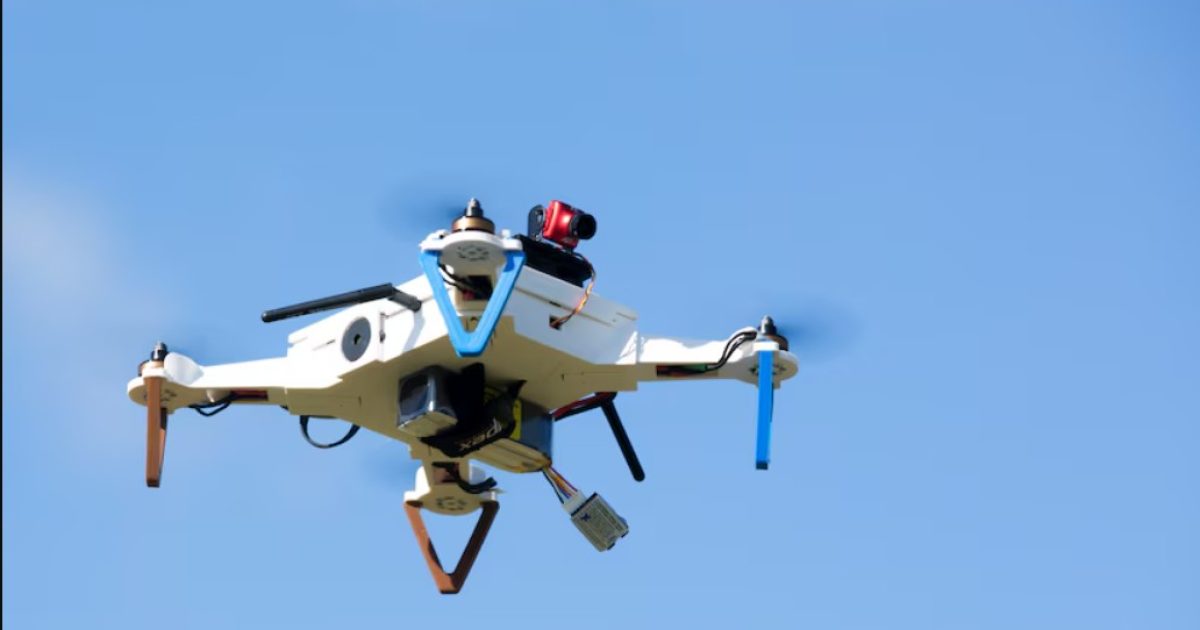
Drones are increasingly being used by Mexican drug cartels. Photo courtesy of the Department of War.
On the night of February 10, 2026, the FAA abruptly shut down all airspace within a 10-mile radius of El Paso International Airport.
The closure was lifted seven to nine hours later, on the morning of February 11, with the FAA stating that the threat had been “neutralized.”
Transportation Secretary Sean Duffy and the White House said the shutdown was necessary because Mexican cartel drones had breached U.S. airspace. According to the administration, the drones were intercepted and neutralized by the U.S. military.
The incident fits into a broader pattern of cartels deploying increasingly advanced drone technology for surveillance and smuggling near the border, capabilities they have refined through exposure to modern drone warfare tactics developed in Ukraine.
The alleged incursion renewed concern over the growing firepower and sophistication of organized crime groups in Mexico.
Mexican President Claudia Sheinbaum rejected claims of a drone incursion, stating there was no evidence of activity at the border.
Representative Veronica Escobar said drone incursions from Mexico are “nothing new,” noting they have occurred for years.
The Pentagon reports more than 1,000 drone incursions per month along the southern border, and more than 27,000 drone detections were recorded within 500 meters of the border in the last six months of 2024.
In one October case, customs officials seized a drone carrying 3.6 pounds of fentanyl pills. While there has never been a confirmed cartel drone attack on U.S. soil, surveillance and smuggling flights occur nearly every day.
Cartel expert Eduardo Guerrero says that, in addition to drones, Mexican cartels now possess armored vehicles, landmines, and grenade launchers.
He explained that they have surpassed Mexican authorities technologically because they can rapidly acquire advanced weaponry without bureaucratic constraints.
He described drones as fundamental to their strategy, especially when combined with artificial intelligence, giving criminal groups increasing battlefield-style advantages.
Drone weaponization in Mexico dates back to at least 2017, when authorities seized a commercial quadcopter carrying an improvised explosive device.
Since then, drones have been used for reconnaissance, drug and weapons trafficking, and targeted attacks. In parts of Michoacán, analysts have documented large-scale bombing campaigns using drones that displaced significant populations.
Ukraine’s war has become a laboratory for low-cost, adaptable drone warfare. After initially relying on expensive loitering munitions, Ukrainian forces shifted to commercially available FPV drones costing under four hundred dollars and assembled from off-the-shelf parts.
Operators integrated signal-relay drones, artificial intelligence targeting features, and fiber-optic tethering to counter electronic warfare. These scalable tactics can be learned quickly and transferred beyond the battlefield.
Groups such as the Sinaloa cartel and the Cártel de Jalisco Nueva Generación are now testing FPV drones, while armored “narco-tanks” have been modified with protective cages to counter drone strikes.
Cartels have evolved from dropping grenades from quadcopters to deploying FPV “kamikaze” drones that detonate on impact.
Typically costing between $400 and $700 and often sourced from China, these devices are fitted with improvised explosive charges or, in some cases, C4, allowing cartels to strike fortified compounds or high-value targets without deploying large numbers of gunmen.
Ukrainian counterintelligence services launched an investigation after Mexico’s National Intelligence Center warned that Mexican nationals had joined Ukraine’s International Legion to obtain first-person-view drone training.
Authorities believe some volunteers entered under false identities or humanitarian cover to receive instruction in drone manufacturing, electronic-warfare resistance, thermal avoidance, and coordinated strike tactics.
The investigation focused on Spanish-speaking units, including the tactical group “Ethos” operating in the Donetsk and Kharkiv regions. One case involved a Mexican national using the alias “Águila-7,” who entered Ukraine in March 2024 with fraudulent Salvadoran documents and completed drone training in Lviv.
His advanced knowledge of electronic-warfare countermeasures and thermal detection avoidance raised suspicions, and background checks reportedly indicated possible ties to Mexico’s elite GAFE special forces, whose former members have joined cartel groups such as the Zetas.
Additional cases involved at least three former FARC fighters who allegedly entered using forged Panamanian and Venezuelan documents, with relocation assistance linked to cartel-connected entities.
Investigators say the effort reflects coordinated planning, forged documentation, front companies, and private security networks across Latin America.
Cartels are also investing in counter-drone systems. The Los Mayitos faction of the Sinaloa Cartel has reportedly acquired Chinese-made Skyfend signal jammers capable of disrupting drone communications.
These portable systems can force drones to return to their origin or crash, and some groups are seeking radar detection systems and missile-based countermeasures.
Cartels are experimenting with fiber-optic tethered drones to bypass jammers, since the cable allows operation without relying on radio signals.
The downstream effects are shaping U.S. security planning. NORTHCOM has established a rapid-response unit equipped with deployable counter-drone systems, and U.S. Special Operations Command is expanding FPV drone training.
Industry partners are developing surveillance platforms tailored for border-security missions.
While the U.S. recognizes the rising threat of cartel drones, Mexico’s president continues to deny the danger.
This disconnect between assessments documented by U.S. intelligence and dismissed by Mexico’s government supports President Trump’s proposal that the U.S. military conduct counter-cartel operations inside Mexico.
The post Mexican Government Refuses to Recognize Cartel Drone Threat appeared first on The Gateway Pundit.