
Loavesofbread, CC BY-SA 4.0 <https://creativecommons.org/licenses/by-sa/4.0>, via Wikimedia Commons
Over the past few days, an article titled The Lost Generation, by Jacob Savage, has been widely shared and discussed on social media. The piece outlines discrimination against millennial white men in high-status professions, particularly in media, academia, and Hollywood, over the past decade.
The article is heavily data-driven, quantifying its claims and arguing that DEI policies, quotas, and affirmative action have marginalized white men and produced a system of declining mediocrity rather than an evolving meritocracy.
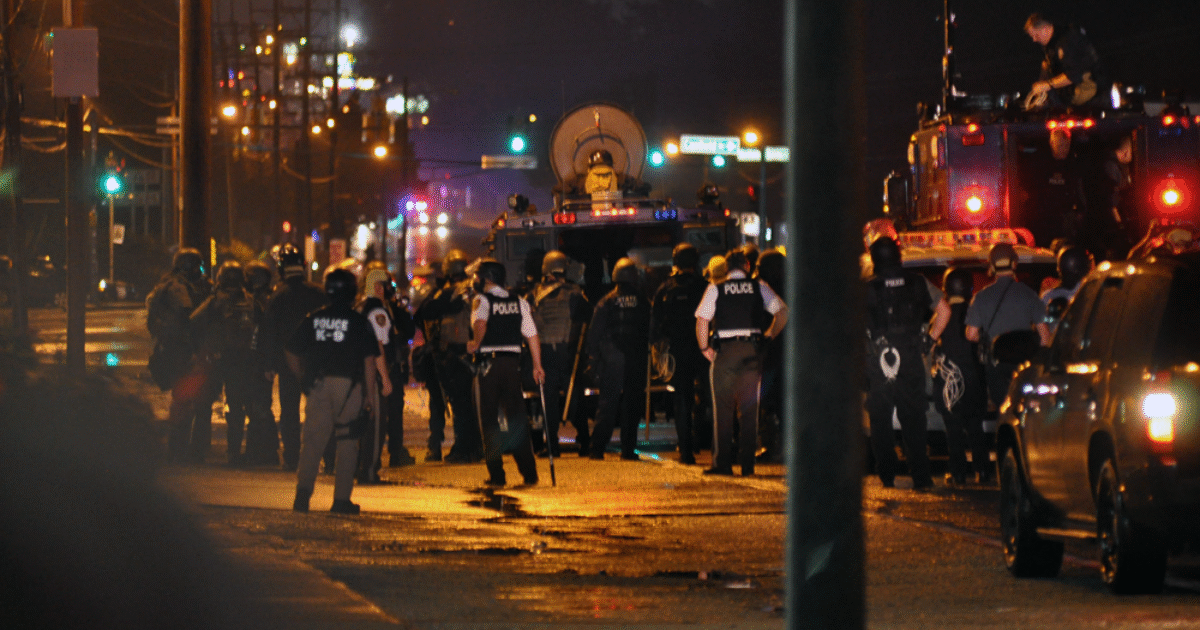
The so-called age of the “racial reckoning” accelerated around 2013 and 2014, coinciding with President Obama’s second term. The shift was turbocharged by the Ferguson incident on August 9, 2014, when Michael Brown, an 18-year-old Black man, was shot and killed by white Ferguson police officer Darren Wilson.
Brown had reportedly stolen cigarillos from a convenience store minutes before the encounter, and a physical altercation occurred between Brown and Wilson at the officer’s police vehicle. Early witness claims alleged that Brown had his hands up and was surrendering while saying “don’t shoot.” Wilson stated that Brown attacked him inside the vehicle, attempted to seize his weapon, fled briefly, then charged at him again.
Subsequent DOJ and FBI investigations found no credible evidence that Brown had his hands up. Forensic evidence and reliable witness testimony corroborated Wilson’s account of self-defense. Despite these findings, riots erupted immediately, including looting, arson, and widespread property destruction, most notably the burning of a QuikTrip convenience store. When a grand jury declined to indict Wilson on November 24, 2014, another wave of riots followed, with at least a dozen buildings set ablaze.
Ferguson, combined with similar high-profile incidents, triggered institutional panic about being perceived as racist. Universities, newsrooms, Hollywood, and corporate America responded by rapidly accelerating diversity initiatives. In academia, hiring programs that had existed for decades suddenly acquired concrete demographic targets.
After Ferguson, Black Lives Matter, and later #MeToo, universities implemented sweeping new policies. At Brown University, for example, of 45 tenure-track hires in the humanities and social sciences since 2022, only three, or 6.7 percent, were white American men.
News organizations faced similar pressure. In 2014, NPR reported that emerging media outlets such as Vox, BuzzFeed, and Politico were overwhelmingly staffed by white men. Following Ferguson, these organizations underwent dramatic demographic shifts. Vox Media went from being 82 percent male and 88 percent white in 2013 to 37 percent male and 59 percent white by 2022. NPR reported that 78 percent of its 2021 new hires were non-white. At the Los Angeles Times, only 7.7 percent of interns hired since 2020 were white men.
Hollywood followed the same trajectory. In 2011, white men accounted for 48 percent of lower-level television writers. By 2024, that figure had fallen to just 11.9 percent. Fellowships, grants, and hiring incentives became oriented toward changing who gained entry rather than rewarding demonstrated ability.
Corporate America mirrored this pattern. DEI-related job positions increased by 60 percent nationwide by 2020. Chief diversity officer roles grew nearly 169 percent between 2019 and 2022, and 86 percent of large financial firms increased DEI training investments. By 2021, the United States was spending an estimated $3.8 billion annually on DEI training.
Ferguson also produced a broader moral framework. The Ferguson Police Department, a majority-white force serving a majority-Black community, became a template for viewing white institutional authority as inherently racist. White men were increasingly cast as presumed oppressors, while “systemic racism” became the default explanation for individual incidents.
Institutions felt compelled to demonstrate visibly that they were not “another Ferguson,” and the response became explicit demographic targeting, even without formal quotas. As Jacob Savage observed, the DEI system became self-radicalizing. Without defined benchmarks, diversity initiatives operated on a simple principle: the correct number of white men was always fewer than the number currently employed. Hiring managers acknowledged that excluding white men was routine and that hiring the best candidate was no longer the priority.
The burden of this shift fell along generational lines. Older white men, primarily Boomers and Gen X, were already established in senior roles, protected by tenure and seniority. Diversity pressure was directed downward toward entry-level positions. Millennial white men absorbed the impact. Those who were 40 in 2014 were already secure, while those around 30 “hit the wall.” Internships, fellowships, junior faculty roles, and early-career newsroom positions were where demographic change was most aggressively enforced.
Ferguson also created a cultural permission structure. The dominant narrative framed the incident as police brutality against an unarmed Black man and as evidence of systemic racism rooted in white institutional power. This narrative justified explicit racial considerations in hiring, differential treatment of white male applicants, and widespread self-censorship. Nearly everyone Savage interviewed demanded anonymity, citing fear of being labeled racist for questioning DEI practices.
Despite official findings clearing Officer Wilson of wrongdoing, the narrative never changed. Politicians such as Elizabeth Warren and Kamala Harris continued referring to the incident as “murder” years later. Media organizations never corrected the “Hands Up, Don’t Shoot” claim with the same intensity with which it was promoted. Institutions continued operating as if the debunked narrative were factual, using it as the foundation for long-term policy changes.
Ferguson became part of a broader “racial reckoning” timeline, which was given a tremendous boost in 2020 when career criminal George Floyd died of a fentanyl overdose while resisting arrest.
The post The Lost Generation: How Ferguson Sparked the War on White Men appeared first on The Gateway Pundit.