
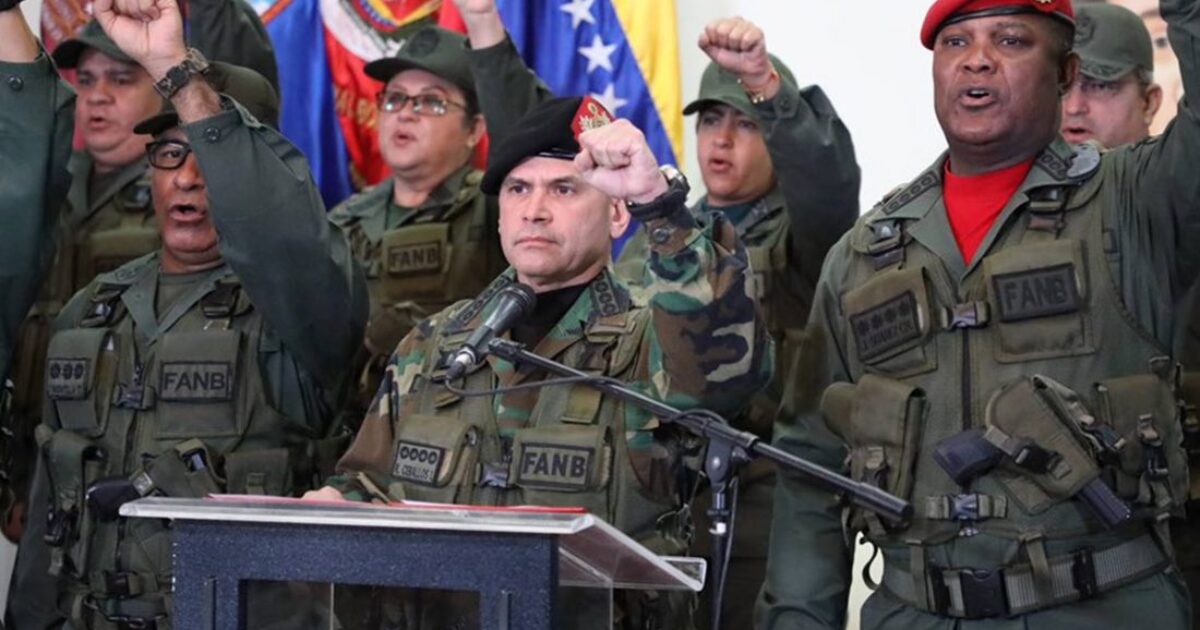
Photo courtesy of the República Bolivariana de Venezuela, Ministerio del Poder Popular para la Defensa.
U.S. lawmakers’ divisions over the boat strikes in Venezuela have widened as the situation in the Caribbean escalates. President Trump confirmed he recently spoke with Nicolás Maduro and declared Venezuelan airspace closed, fueling speculation about possible military action. The administration is facing scrutiny after a Washington Post report alleged that Defense Secretary Pete Hegseth ordered a boat strike in September that killed survivors of the initial attack.
Congressional leaders from both parties on the House and Senate Armed Services Committees say they are investigating whether the operation violated the laws of war. The White House confirmed Hegseth authorized the second strike and defended the action as lawful, describing the targets as narco-terrorists designated as members of a foreign terrorist organization.
Meanwhile, alliances are shaping up in the Caribbean, with many countries abandoning Venezuela and supporting the United States. Venezuelan leader Nicolás Maduro is becoming increasingly isolated as regional governments shift away from Chavismo and move closer to Washington. Honduras and St. Vincent and the Grenadines, once reliable partners for Caracas, have both elected new governments that pledged to distance themselves from Maduro.
In Honduras, leftist candidate Rixi Moncada finished a distant third, leaving two right-leaning contenders who promise to cut ties with Venezuela. In St. Vincent and the Grenadines, longtime Maduro ally Ralph Gonsalves lost power after nearly twenty-five years, replaced by center-right leader Godwin Friday. Venezuela’s relationships with Argentina, Ecuador, El Salvador, and Bolivia have also deteriorated as those countries shifted to the right.
These developments reflect a broader regional trend following Venezuela’s disputed 2024 election, in which Maduro claimed victory despite evidence to the contrary.
As Maduro loses political allies, the United States is building support among several Caribbean partners during its naval deployment in the region. The Dominican Republic has authorized U.S. forces to operate at San Isidro Air Base and Las Américas International Airport, allowing refueling, equipment transport, and technical operations to counter narcotrafficking. President Luis Abinader described drug trafficking as a borderless threat and emphasized that the expanded U.S. presence is technical, limited, and temporary.
Trinidad and Tobago’s Prime Minister Kamla Persad-Bissessar has supported U.S. interdiction efforts and confirmed that Marines are assisting with radar, runway, and security upgrades at Tobago’s airport to improve surveillance.
Puerto Rico and the U.S. Virgin Islands, both U.S. territories, have seen a renewed military buildup, with fighter jets and transport aircraft operating from Cold War-era facilities such as Roosevelt Roads and new activity at St. Croix’s airport. Grenada is considering a U.S. request to host temporary radar equipment and personnel at Maurice Bishop International Airport. The government is still weighing technical and safety concerns, and the decision is complicated by the 1983 U.S. invasion and the airport’s symbolic significance.
Colombia remains the strongest partner, working closely with the United States on counter-narcotics, sanctions enforcement, and intelligence sharing, while also coordinating policy on the region’s largest population of Venezuelan refugees. Paraguay and Uruguay consistently vote with Washington at the OAS to isolate Maduro and support democratic transition efforts. Ecuador works with the United States on organized crime, Venezuelan gang activity, and sanctions evasion, and has been publicly critical of the regime.
Even countries governed by the left or center-left have cooled their relations with Venezuela. Brazil, Chile, Mexico, and Colombia have all limited contact with Caracas. Colombia’s President Gustavo Petro restored diplomatic ties early in his term but has since distanced himself, acknowledging Venezuela’s democratic crisis.
Chile condemns human-rights abuses, supports democracy-restoration efforts, and maintains cooperation on refugee policy. Argentina under Javier Milei has openly aligned with Washington, denounced authoritarian governments, and supported U.S. diplomatic pressure at the OAS and the UN. Although Brazil under Lula da Silva reestablished formal ties with Caracas, the relationship remains far below earlier levels. Brazil is not a U.S. ally against Venezuela, but it has supported OAS pressure for free elections, joined regional diplomatic efforts, and quietly limited Venezuelan oil transshipment.
Maduro’s remaining allies in the region are Cuba and Nicaragua, but neither is positioned to provide meaningful assistance. Cuba publicly supports Venezuela but is facing a severe economic crisis and avoids committing to any response if the United States takes military action. Nicaragua’s President Daniel Ortega has criticized the U.S. military buildup but has offered no actual help. Although Bolivia and Mexico maintain positions closer to Caracas, they have not taken steps that would alter Venezuela’s strategic isolation.
As the United States deploys more than a dozen warships and 15,000 personnel to the Caribbean under Operation Southern Spear, Maduro has responded with familiar defiance, insisting that Venezuelans have endured years of sanctions and pressure. Advisers say he is preparing for negotiations and will not concede anything unless forced, betting that the White House ultimately has limited appetite for a large-scale intervention. From the U.S. side, it is unclear how far President Trump is willing to push the conflict, particularly if Maduro does not step down. Ostensibly, in a war, Venezuela would stand little chance against the United States and its allies.
The post Trump’s Latin American Allies Against Venezuela appeared first on The Gateway Pundit.