
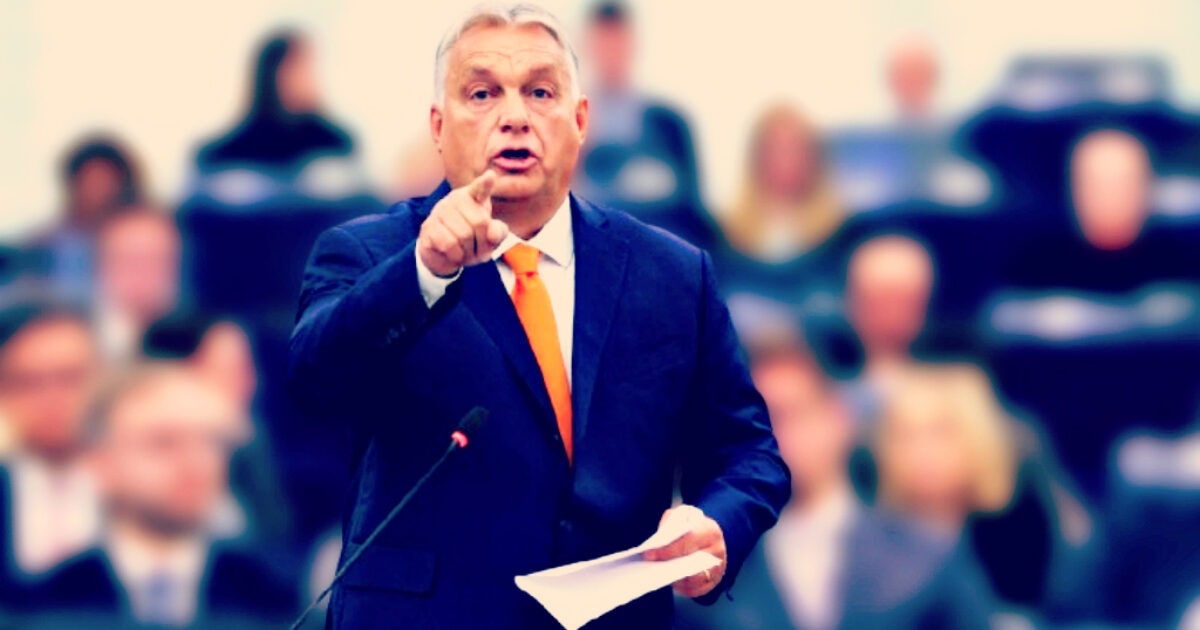
Hungary’s right-wing, anti-globalist Prime Minister Viktor Orbán has ordered the immediate troop deployment to secure the country’s critical energy infrastructure, accusing Ukraine of deliberately attempting to destabilize Hungary’s energy system for political leverage.
The announcement comes following an emergency meeting of Hungary’s Defense Council that was convened after oil shipments through the Druzhba pipeline, which traverses through Ukraine, abruptly stopped late last month. According to Orbán, no Russian crude has reached Hungary via the route since that date.
In a video statement posted to social media, the Hungarian prime minister rejected claims made by the government in Kyiv that the disruption was caused by technical damage. He argued instead that the shutdown was politically motivated and designed to exert pressure on Hungary and neighboring Slovakia, both of which have refused to bow to pro-war dictates from Brussels and Kyiv.
We will not give in to blackmail
I have ordered increased security for critical energy infrastructure.
The Ukrainian government is exerting pressure on the Hungarian and Slovak governments through an oil blockade. They will not stop there, as they are preparing further… pic.twitter.com/bulICvhy1m
— Orbán Viktor (@PM_ViktorOrban) February 25, 2026
“The data clearly shows that this unprecedented halt is not technical, but political,” Orbán said, adding that Hungary “cannot be blackmailed.”
Hungarian Foreign Minister Péter Szijjártó, for his part, echoed the prime minister’s position, stating that the Druzhba pipeline had not been disabled by a Russian strike, as Kyiv has claimed. Instead, he accused the Ukrainian government of intentionally halting transit to influence Hungarian domestic politics and its upcoming election next month.
Szijjártó further asserted that Kyiv’s actions were part of what he described as a broader “anti-Hungarian policy,” suggesting hostility toward Budapest’s independent stance within the European Union.
In response to what he described as credible national security assessments, Orbán ordered the deployment of troops and equipment to safeguard major energy facilities. Hungarian soldiers will now be stationed near power plants, distribution centers, and key dispatch hubs.
Police patrols have also been intensified around designated energy sites. In addition, the government has imposed a temporary ban on drone flights in Szabolcs-Szatmár-Bereg County, which borders western Ukraine.
Additionally, Orbán stated that Hungarian intelligence services believe Ukraine may be preparing further actions aimed at disrupting Hungary’s energy system. He did not provide specific operational details but framed the measures as defensive and precautionary.
The dispute, unsurprisingly, has further strained relations between Budapest and Kyiv, while also exposing deeper divisions within the European Union over continued support for Ukraine. Hungary, like its neighbor Slovakia, which is ruled by anti-globalist prime minister Rober Fico, has consistently opposed additional military escalation and has resisted EU pressure to sever all energy ties with Russia.
Slovakia, whose government has similarly pursued a more cautious stance toward the conflict, has aligned itself with Hungary’s position. Slovak Prime Minister Robert Fico suggested that available information indicated the pipeline could be operational and questioned delays attributed to Kyiv.
Fico directly criticized Ukrainian President Volodymyr Zelensky, arguing that Ukraine should not assume it can dictate terms to EU member states dependent on energy transit routes.
STATEMENT OF THE PRIME MINISTER OF THE SLOVAK REPUBLIC
I have fulfilled what I declared on Saturday: “If oil supplies to Slovakia are not restored by Monday, I will ask SEPS, the state-owned joint-stock company, to halt emergency electricity supplies to Ukraine. In January… pic.twitter.com/EyjfEgmple
— Robert Fico (@RobertFicoSVK) February 23, 2026
Both Hungary and Slovakia have been forced to draw on emergency oil reserves to sustain refinery operations amid the Druzhba stoppage. Hungary’s energy company MOL has sought alternative supplies through the Adriatic pipeline, ordering shipments from multiple global sources, including Saudi Arabia, Norway, and Kazakhstan.
However, Hungarian officials maintain that these measures are temporary workarounds rather than long-term solutions. They rightly insist that stable and predictable transit routes are essential for national energy security.
The energy dispute has also intersected with broader political battles within the EU. Hungary continues to block the latest sanctions package against Russia, as well as a proposed €90 billion EU loan to Ukraine.
Budapest insists that the veto reflects its defense of national interests, arguing that escalating financial and military commitments to Kyiv place disproportionate burdens on Central European states.
Orbán has made energy sovereignty a central theme of his political platform, presenting the issue as part of a broader choice between “war and peace.” He contends that continued confrontation prolongs instability and undermines European economic resilience.
Meanwhile, Kyiv continues to claim that repairs to the Druzhba pipeline cannot be completed immediately. Ukrainian officials claim the disruption to earlier damage, though Budapest disputes that explanation.
As the standoff continues, Hungary’s government insists it will pursue diversified energy strategies while resisting what it regards as coercive tactics.
Hungary’s pivotal national parliamentary elections are set to be held April 12th. Orbán’s Fidesz party, which has held power since 2010 and secured a supermajority in 2022, now faces its strongest challenge from the rising EU-backed, centrist-globalist Tisza party led by Péter Magyar—a former Fidesz insider turned critic.
This election has the potential to reshape Hungary’s domestic politics and European politics more broadly, as Orbán’s government has long served as a central node in the Europe-wide national-populist movement.
The post Orbán Deploys Troops to Guard Critical Energy Sites, Accuses Ukraine of Political Energy Sabotage Amid Pipeline Blackout appeared first on The Gateway Pundit.