
The Supreme Court’s radical departure from the law and basic principles of constitutional governance in last Friday’s abominable decision, Learning Resources, Inc. v. Trump, marked an affront to the judiciary and a setback for the administration.
For an institution mired in a crisis of legitimacy, a court that has drifted far afield of the Constitution’s original text and intended meaning by its designers over a decades-long peregrination, the High Court did itself no great service by intruding into a domain that the Constitution never intended.
Executive and legislative power is clear and straightforward. Article I of the Constitution equips the Congress with the power of the purse.
This includes tax and spending powers, as well as the ability to appropriate funding to the various government agencies.
Under Article II, the executive, or chief magistrate, has a whole separate slate of powers dealing with the enforcement of laws and regulations.
Foremost among executive power, however, is the ability to wage war and engage in international diplomacy.
Under this umbrella includes the numerous interests to national security.
Whether a foreign power poses a threat to the homeland, either directly through military intervention and war or indirectly through toxic policies, from drug smuggling to economic tampering, the executive is tasked with mitigating that threat, and doing so largely unencumbered by the other two branches of government.
The tariff power is unique in that it resembles traditional tax and spending powers to the extent that it fills government coffers with duties imposed on foreign imports.
However, its use, both traditionally and in practice, is fundamentally distinct from ordinary taxation.
This accounts for both its distinct name (after all, it would be easier to just call tariffs ‘foreign taxes’) as well as its long-running, commonly understood role as an extension of executive power, not simply a legislative protocol.
Which makes sense. While tariffs raise money, in most historical cases up through today, the raising of revenue is an auxiliary consideration.
The primary reason behind the policy, from George Washington to Donald Trump, has primarily been a means to protect the nation.
In that regard, tariffs are a significant arrow in the President’s foreign policy quiver. Tariffs may be leveraged against would-be adversaries to bring them to diplomatic heel.
In the most extreme cases, a tariff may be the one thing that gets a hostile party to a clear-headed negotiation.
Indeed, it can be the very difference between life and death: a superpower may think twice about invading a vulnerable satellite country if the threat of imposing a 15 or 20 percent tariff on semiconductors or automobile parts looms over its head.
Tariffs might also get a foreign country to get its own house in order.
If a country exercises tariffs against an important sector in a competitor nation, in part because the competitor is harming the tariff-imposing country in some way, such as by not containing their criminal organizations, that may be enough of a carrot to get the targeted nation to clamp down on crime, stop migration, or enact whatever policy may be needed to stop causing harm.
Facing the threat of economic devastation, any country will mobilize any force necessary to control the problematic behavior. It comes down to simple cost-benefit analysis that appeals to common sense.
For these reasons, the tariff power is decisively a national security power, not a tax and spending power.
Because it is a national security power, the President has traditionally been accorded wide discretion to enact policies as he sees fit on the global arena, usually with fairly limited congressional oversight.
This is not a bug but rather a feature of the system. The Founding Fathers wanted to give the President of the United States enough breathing room in the domain of international affairs to realize his peacekeeping vision.
The nature of the business called for flexibility: an enemy will not wait for the deliberative mechanisms of constitutional governance before waging an attack.
Enemies do not respect the rules of decorum for a constitutional system, particularly the enemies of the United States.
This is something the majority in the Supreme Court does not seem to grapple with: such deliberations will be exploited, not respected, by any foe.
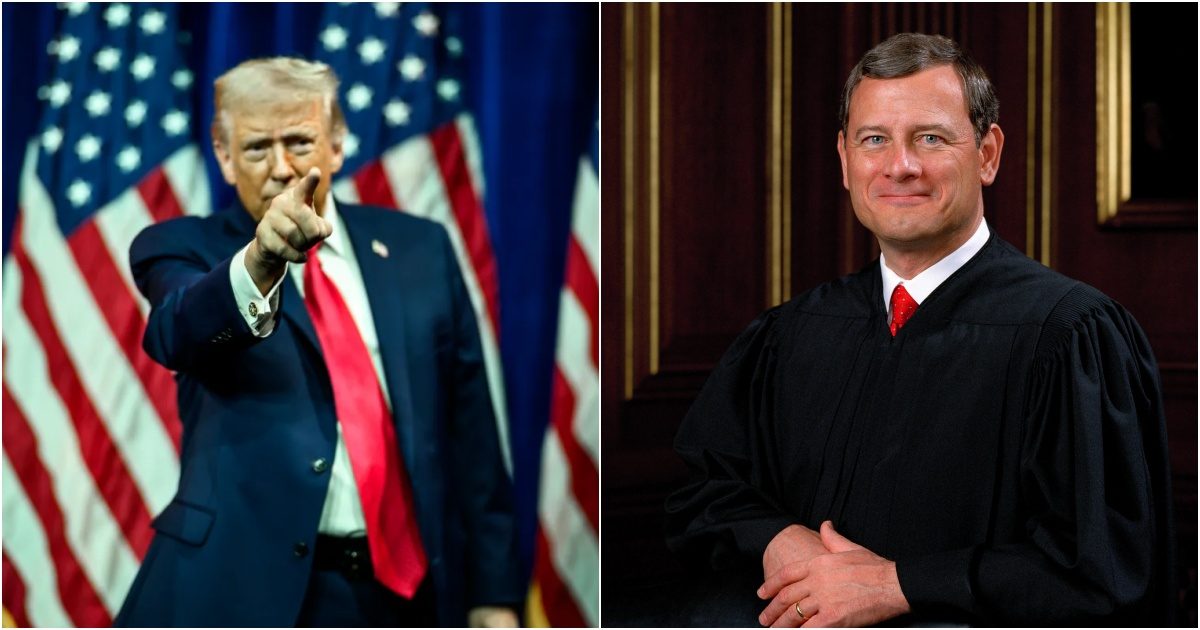
This is why Justices Gorsuch, Roberts, and Barrett, all of whom should know better being the appointees of Republican presidents (two of them being Trump nominees) made a grave mistake.
To say that the tariff power is strictly a tax power, and then to conflate two entirely distinct powers with that logic, betrays both history and the wisdom of the constitutional architects.
Moreover, it demonstrates ignorance about fundamental rules of statesmanship.
Namely, how tariffs have traditionally always been used as an instrument to help presidents either avoid conflict or mitigate foreign tensions by using economic leverage to tamp down the flames of violence before things got too heated, or curb the countless indirect catastrophes that necessarily follow from any number of deleterious initiatives a competitor might do to weaken the culture or economy of its adversary.
Fortunately for the President, because of this precedent about tariffs being primarily a national security power, he should be able to easily revive the tariffs, backed by the force of law that should make another challenge insurmountable.
However, for the Court, which continues to reveal its ignorance to the world with decisions like this, the probability of rehabilitating its image in the public eye is much less certain.
In this calculus, the reputational damage has been done. The Court is demonstrating that rather than being a neutral and impartial arbiter of the law, it would prefer to be an unelected legislator and make policies that it has no responsibility or prerogative to do.
This is not good for the Court or the Country. If the intent is to fix the country, the Roberts court had better reckon with reality and reverse course fast, or risk further delegitimizing itself and harming the nation.
The post Why Donald Trump Is Correct, And The Supreme Court Wrong, About Tariffs appeared first on The Gateway Pundit.