
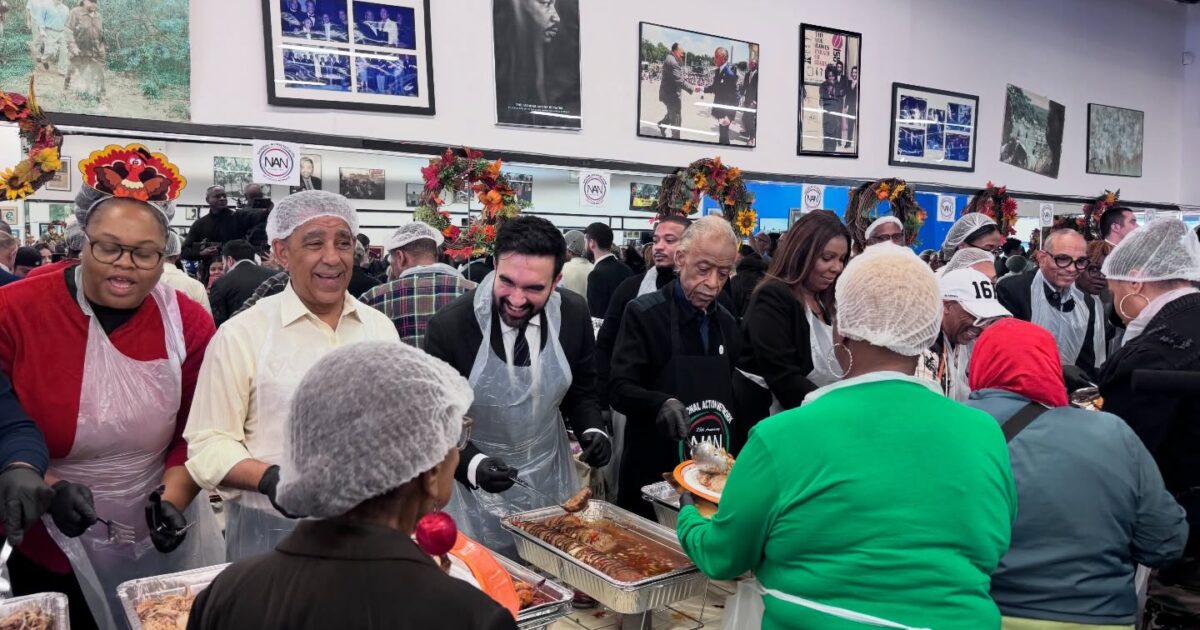
New York City’s new social democrat mayor, Zohran Mamdani, promised his constituents a slate of freebies, including free buses, daycare, and state-run grocery stores, but budgetary and legal restrictions will prevent him from implementing his socialist utopia. Photo courtesy of Zohran Kwame Mamdani on Facebook.
Margaret Thatcher once characterized socialism by saying, “The problem with socialism is that you eventually run out of other people’s money.” The experience of Zohran Mamdani’s quixotic attempt to transform New York City into a socialist paradise, an oxymoron, demonstrates that Thatcher’s observation requires an addition: you also need the permission of the people paying for it.
In layman’s terms, like a child asking his mother for ice cream money, Mamdani asked Governor Hochul for permission, and she said “no.”
New York City Mayor Zohran Mamdani’s campaign promises face structural barriers that make implementation impossible. Under New York State Constitution Article XVI, NYC mayors cannot raise taxes independently. Only the state legislature can authorize local tax increases, requiring approval from both chambers and Governor Kathy Hochul.
During a PIX11 interview in early January 2026, Hochul stated that increasing taxes on wealthy New Yorkers is “completely off the table.” She pointed out that 1.5% of New Yorkers pay one-third of the state’s entire budget. She refuses to risk driving them out with higher taxes.
Mamdani proposed a 2-percentage-point increase on NYC income tax for those earning over $1 million, raising the rate from 3.9% to 5.9%, plus increasing corporate tax rates from 7.25% to 11.5%. His campaign estimated this would generate $4 billion annually. Without this revenue, his agenda collapses.
Hochul’s January 2026 $260 billion state budget includes no income tax increases and extends the 7.25% corporate tax rate for three more years, rejecting Mamdani’s proposed increase. While State Assembly Speaker Carl Heastie and Senate Majority Leader Andrea Stewart-Cousins have expressed openness to tax increases, Hochul faces her own 2026 re-election campaign and a primary challenge from Lt. Gov. Antonio Delgado.
Even if both legislative chambers pass tax increases, Hochul can veto the legislation. With her own election approaching, it is unlikely that she would take a radical decision that would alienate her wealthy donor base. Overriding a gubernatorial veto requires a two-thirds supermajority in both chambers, which Mamdani’s allies cannot achieve.
NYC Comptroller Mark Levine announced in mid-January 2026 that the city faces a $2.2 billion deficit for fiscal year 2026 and a $10.4 billion deficit for fiscal year 2027, totaling a cumulative gap of $12.6 billion. Levine blamed chronic underbudgeting by the Adams administration for rental assistance, overtime, shelter costs, public assistance, DOE due process cases, and MTA contributions, totaling $3.8 billion in unbudgeted expenses for FY2026 alone. He stated that the deficit was not caused by a bad economy but by budgeting decisions from the previous administration.
This is the first time since the Great Recession that the city faces a budget shortfall of this magnitude this late in the fiscal year. Mamdani’s first deputy mayor Dean Fuleihan stated the administration would only include new tax revenue if it were included in Hochul’s budget, which it was not.
With a severe revenue shortfall, Mamdani’s plans for free programs are unlikely to materialize. He has promised fare-free buses by eliminating the $2.90 fare on all MTA buses citywide, universal childcare, and state-funded “baby baskets” for every newborn containing formula, diapers, and postpartum supplies.
His platform also includes replacing police with free, civilian-led mental health response teams for all 911 mental health calls, creating publicly funded “at-cost” social housing for 200,000 households to remove profit from rent, and establishing city-run grocery stores that would sell food at cost in underserved neighborhoods. In addition, he has pledged expanded, year-round free access to youth clinics and recreational centers, along with universal free breakfast, lunch, and dinner for all K–12 students.
The MTA is a state agency controlled by the governor, not the mayor. Mamdani cannot unilaterally make buses free. Cost estimates for free buses vary: Mamdani’s campaign projected $700 million annually, MTA Chair Janno Lieber estimated closer to $1 billion annually, the Independent Budget Office calculated a minimum of $652 million, and full analysis including MTA Bus reached $1.38 billion in 2025 dollars. Lieber stated that any change must be studied extensively and expressed skepticism.
The MTA declared a 2023-2024 pilot program for free buses on five routes a failure because bus speeds did not improve, only 12% of riders were new to transit, only 11% of new riders switched from cars, and 45% of new riders would have walked or skipped the trip. When asked if free buses would appear in her State of the State address in January 2026, Hochul said “not at this time” and has not budgeted state funds for the program.
Instead of implementing free buses, the MTA announced plans to hire fare enforcement officers with handheld devices to combat the $900 million annual loss from fare evasion.
Mamdani promised free universal childcare for children aged 6 weeks to 5 years at an estimated cost of $6 billion annually. In her January 2026 State of the State address, Hochul announced she would fund the first two years of free pre-K for 2,000 2-year-olds annually in NYC. This allows her to take credit for the childcare initiative, control the scope and funding, avoid raising taxes to pay for it, and undercut Mamdani’s signature issue. Political observers note Hochul is using state money to deliver a scaled-down version of Mamdani’s promise while running for re-election in 2026, positioning herself to take credit without empowering Mamdani’s broader agenda.
NYC’s Rent Guidelines Board sets rates for rent-stabilized apartments. While the mayor appoints board members, implementing a complete rent freeze would likely require state legislative approval and face legal challenges from landlords. Housing experts warn that freezing rents without providing financial resources for small landlords will lead to apartments falling into disrepair and worsen the housing crisis. The Real Estate Board of New York has signaled opposition.
Implementing city-run grocery stores in all five boroughs requires City Council approval. Political analyst J.C. Polanco stated the odds of City Council support are minimal because council members have dozens of bodegas and supermarkets in their districts. These businesses are part of the fabric of the community, and city councilmembers would have to vote for government-run stores that compete with their constituents’ businesses.
Mamdani’s movement ended before it began. He legally cannot raise taxes because only the state can and Hochul refuses. He does not control the buses because the MTA does and they oppose free fares. He inherited a $12.6 billion deficit over two years. The City Council will resist city-owned grocery stores. Hochul is co-opting his agenda by implementing scaled-down versions on her terms without raising taxes. NYC mayors govern at the pleasure of Albany, and Albany said “no.”
The post Mamdani’s NYC Socialist Experiment Ended Before It Began appeared first on The Gateway Pundit.