
At World Economic Forum, Trump Administration Calls Out Europe for Globalism, Socialism, and Open Borders

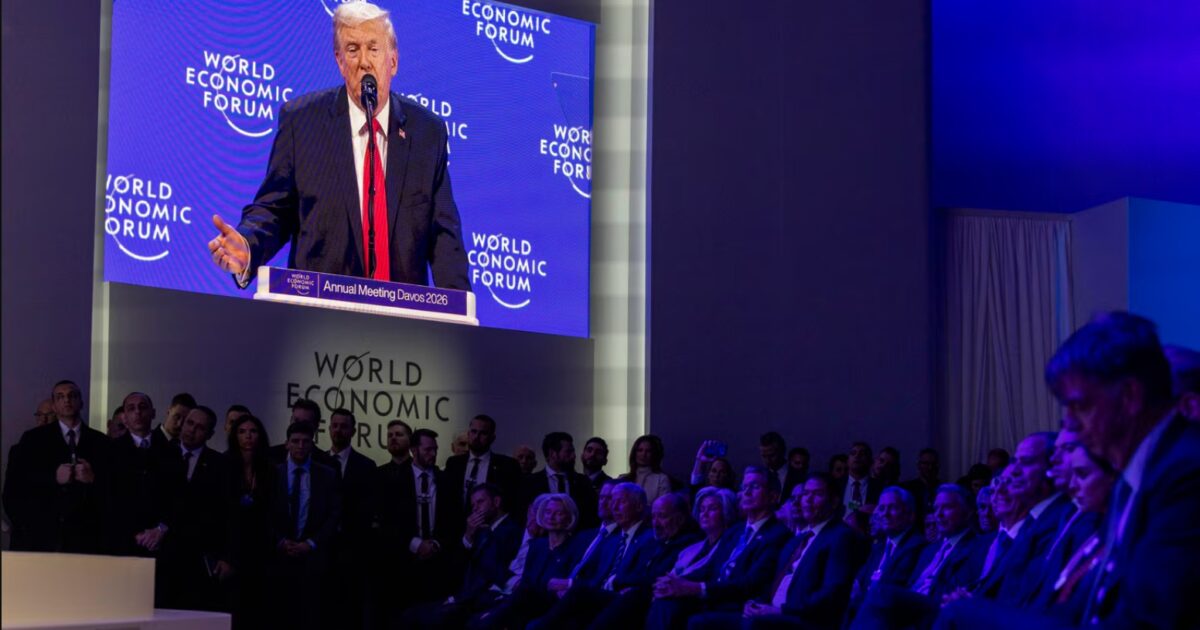
President Trump, Secretary of Commerce Howard Lutnick, and several other anti-globalist advocates of freedom criticized Europe at the 2026 World Economic Forum in Davos.

In true Trumpian fashion, President Trump opened his speech at the Davos World Economic Forum by saying it was a pleasure “to address so many respected business leaders, so many friends, a few enemies.” He told those assembled that he had just marked the one-year anniversary of his second term in office and said the U.S. economy was roaring. According to Trump, it is “exploding, productivity is surging, investment is soaring, incomes are rising, inflation has been defeated.”

He added that foreign direct investment is eighteen times higher than it was under Biden, GDP growth is set to double IMF projections, and the border is now secure. Trump also highlighted a clear departure from socialism, noting that “we’ve lifted more than 1.2 million people off of food stamps.”

Later in the speech, he said the United States had “removed over 270,000 bureaucrats from the federal payrolls, the largest single-year reduction in government employment since the end of World War Two.” He added that his administration had slashed the federal budget by $100 billion and reduced the federal budget deficit by 27 percent. Together, these figures signaled a return to free-market capitalism and renewed private-sector growth, while Europe, by contrast, continues to move in the opposite direction.

Without explicitly saying so, President Trump suggested that none of this could be said about Europe. He said that parts of the continent had become unrecognizable, but in a negative way. “And I love Europe, and I want to see Europe go good, but it’s not heading in the right direction,” he said. Trump attributed Europe’s decline to increased socialism and globalization. In Washington and Europe, he argued, conventional wisdom had taken hold that “the only way to grow a modern Western economy was through ever-increasing government spending, unchecked mass migration, and endless foreign imports.”

The result of these destructive policies, he said, was record budget and trade deficits and a growing sovereignty deficit, “driven by the largest wave of mass migration in human history.” “We’ve never seen anything like it,” he exclaimed. “Quite frankly, many parts of our world are being destroyed before our very eyes.”

Trump added that some leaders appeared baffled by what was happening and did not understand how it occurred, while others did understand but failed to act. “And the ones that do understand aren’t doing anything about it,” he said.

When it was his turn to speak, Secretary of Commerce Howard Lutnick told the Forum, on behalf of the Trump administration, “we are here to make a very clear point. Globalization has failed the West and the United States of America.” He went on to explain that it failed through a policy of offshoring, which he described as “find the cheapest labor in the world, and the world is a better place for it.” However, he said this approach has made America and the West weaker and has failed American workers.

“You shouldn’t offshore your medicine. You shouldn’t offshore your semiconductors,” he warned. “You shouldn’t offshore your entire industrial base and have it be hollowed out beneath you.” He went on to argue that this erosion of manufacturing capacity makes both Europe and the United States dangerously dependent.

Addressing Europe’s climate policies, he said, “Why would you agree to be net zero in 2030 when they don’t make a battery?” He noted that net-zero targets rely heavily on rechargeable electric vehicles and appliances, all of which depend on batteries. “So if they go to 2030,” he said, “they are deciding to be subservient to China, who makes the batteries.”

Americans were not the only ones criticizing Europe’s destructive globalist agenda. Argentine President Javier Milei, an Austrian economist often described as the Trump of South America, reminded Europe that personal liberty was a core principle that had long separated the West from the rest of the world and made it wealthier and more prosperous. In recent years, however, he said “the West began to turn its back on the ideas of liberty.”

Milei reminded the World Economic Forum that he had warned them in 2024 and again in 2025 that “the West was in danger as a result of having embraced increasing doses of socialism in its bourgeois democracy.” He described this shift as “the mental genocide sown by the left in humanity.” This year, however, he said he observed the beginning of a turn back to the right. “The world has begun to awaken,” he said, pointing to developments in the Americas as evidence of a renewed embrace of liberty.

Suggesting that Europe could learn from the United States and Argentina, Milei said, “the Americas will be the vision for life in the future.” He argued that this positive turn was the result of both countries returning to their foundational philosophies rooted in Roman law and Judeo-Christian values. “The Americas will be the beacon of light,” he said. “It will once again illuminate the entire world.”

He concluded on a hopeful note, saying, “We have a better future ahead,” but warned that such a future exists only if the West returns to its roots by embracing the ideas of liberty. He ended with a prayer, saying, “May God bless the West.”

Even Ukraine’s president, Volodymyr Zelenskyy, sharply criticized Europe in his speech, arguing that the continent appears “lost” and overly focused on persuading U.S. President Donald Trump rather than defending itself. Zelenskyy said that instead of leading the defense of freedom, Europe is “trying to convince the U.S. president to change” when American attention shifts elsewhere. He warned that while Trump “loves who he is” and says he loves Europe, “he will not listen to this kind of Europe,” reflecting frustration with what he sees as weak and divided leadership.

Of all the Europe-bashing that took place, Secretary of Commerce Howard Lutnick appeared to be the star. Lutnick reportedly mocked European economies, calling them “underperforming” and “uncompetitive” compared to the United States. He also defended the use of fossil fuels and coal, a major taboo for the Davos crowd, which remains fully committed to what it frames as a climate crisis.

During Lutnick’s remarks, Christine Lagarde, president of the European Central Bank, reportedly stood up and left the room. She was not alone. Several other European officials and executives followed her out mid-speech.

Their departure was unfortunate, because Lutnick delivered what may have been the most important takeaway of the forum. He reaffirmed that “America first is the job of our government,” clarifying that this does not mean America alone, but America first. He encouraged leaders elsewhere to do the same and to prioritize their own people. Europe, however, seems unlikely to follow that path, continuing instead to prioritize globalization over sovereignty, liberty, and prosperity at home.

The post At World Economic Forum, Trump Administration Calls Out Europe for Globalism, Socialism, and Open Borders appeared first on The Gateway Pundit.
At World Economic Forum, Trump Administration Calls Out Europe for Globalism, Socialism, and Open Borders

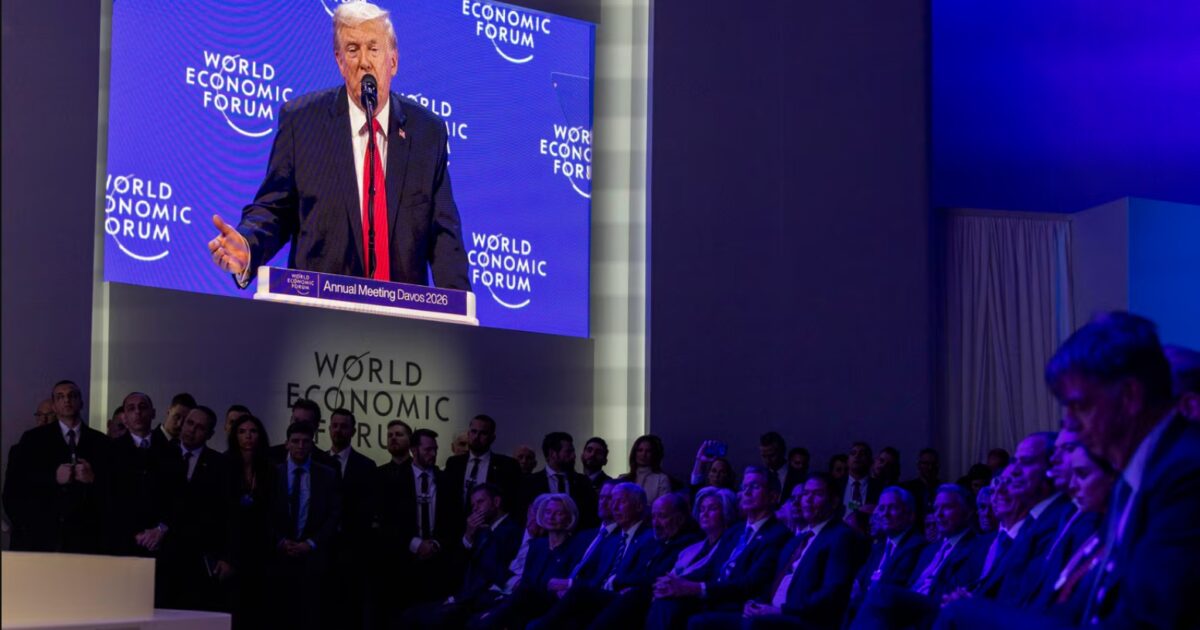
President Trump, Secretary of Commerce Howard Lutnick, and several other anti-globalist advocates of freedom criticized Europe at the 2026 World Economic Forum in Davos.

In true Trumpian fashion, President Trump opened his speech at the Davos World Economic Forum by saying it was a pleasure “to address so many respected business leaders, so many friends, a few enemies.” He told those assembled that he had just marked the one-year anniversary of his second term in office and said the U.S. economy was roaring. According to Trump, it is “exploding, productivity is surging, investment is soaring, incomes are rising, inflation has been defeated.”

He added that foreign direct investment is eighteen times higher than it was under Biden, GDP growth is set to double IMF projections, and the border is now secure. Trump also highlighted a clear departure from socialism, noting that “we’ve lifted more than 1.2 million people off of food stamps.”

Later in the speech, he said the United States had “removed over 270,000 bureaucrats from the federal payrolls, the largest single-year reduction in government employment since the end of World War Two.” He added that his administration had slashed the federal budget by $100 billion and reduced the federal budget deficit by 27 percent. Together, these figures signaled a return to free-market capitalism and renewed private-sector growth, while Europe, by contrast, continues to move in the opposite direction.

Without explicitly saying so, President Trump suggested that none of this could be said about Europe. He said that parts of the continent had become unrecognizable, but in a negative way. “And I love Europe, and I want to see Europe go good, but it’s not heading in the right direction,” he said. Trump attributed Europe’s decline to increased socialism and globalization. In Washington and Europe, he argued, conventional wisdom had taken hold that “the only way to grow a modern Western economy was through ever-increasing government spending, unchecked mass migration, and endless foreign imports.”

The result of these destructive policies, he said, was record budget and trade deficits and a growing sovereignty deficit, “driven by the largest wave of mass migration in human history.” “We’ve never seen anything like it,” he exclaimed. “Quite frankly, many parts of our world are being destroyed before our very eyes.”

Trump added that some leaders appeared baffled by what was happening and did not understand how it occurred, while others did understand but failed to act. “And the ones that do understand aren’t doing anything about it,” he said.

When it was his turn to speak, Secretary of Commerce Howard Lutnick told the Forum, on behalf of the Trump administration, “we are here to make a very clear point. Globalization has failed the West and the United States of America.” He went on to explain that it failed through a policy of offshoring, which he described as “find the cheapest labor in the world, and the world is a better place for it.” However, he said this approach has made America and the West weaker and has failed American workers.

“You shouldn’t offshore your medicine. You shouldn’t offshore your semiconductors,” he warned. “You shouldn’t offshore your entire industrial base and have it be hollowed out beneath you.” He went on to argue that this erosion of manufacturing capacity makes both Europe and the United States dangerously dependent.

Addressing Europe’s climate policies, he said, “Why would you agree to be net zero in 2030 when they don’t make a battery?” He noted that net-zero targets rely heavily on rechargeable electric vehicles and appliances, all of which depend on batteries. “So if they go to 2030,” he said, “they are deciding to be subservient to China, who makes the batteries.”

Americans were not the only ones criticizing Europe’s destructive globalist agenda. Argentine President Javier Milei, an Austrian economist often described as the Trump of South America, reminded Europe that personal liberty was a core principle that had long separated the West from the rest of the world and made it wealthier and more prosperous. In recent years, however, he said “the West began to turn its back on the ideas of liberty.”

Milei reminded the World Economic Forum that he had warned them in 2024 and again in 2025 that “the West was in danger as a result of having embraced increasing doses of socialism in its bourgeois democracy.” He described this shift as “the mental genocide sown by the left in humanity.” This year, however, he said he observed the beginning of a turn back to the right. “The world has begun to awaken,” he said, pointing to developments in the Americas as evidence of a renewed embrace of liberty.

Suggesting that Europe could learn from the United States and Argentina, Milei said, “the Americas will be the vision for life in the future.” He argued that this positive turn was the result of both countries returning to their foundational philosophies rooted in Roman law and Judeo-Christian values. “The Americas will be the beacon of light,” he said. “It will once again illuminate the entire world.”

He concluded on a hopeful note, saying, “We have a better future ahead,” but warned that such a future exists only if the West returns to its roots by embracing the ideas of liberty. He ended with a prayer, saying, “May God bless the West.”

Even Ukraine’s president, Volodymyr Zelenskyy, sharply criticized Europe in his speech, arguing that the continent appears “lost” and overly focused on persuading U.S. President Donald Trump rather than defending itself. Zelenskyy said that instead of leading the defense of freedom, Europe is “trying to convince the U.S. president to change” when American attention shifts elsewhere. He warned that while Trump “loves who he is” and says he loves Europe, “he will not listen to this kind of Europe,” reflecting frustration with what he sees as weak and divided leadership.

Of all the Europe-bashing that took place, Secretary of Commerce Howard Lutnick appeared to be the star. Lutnick reportedly mocked European economies, calling them “underperforming” and “uncompetitive” compared to the United States. He also defended the use of fossil fuels and coal, a major taboo for the Davos crowd, which remains fully committed to what it frames as a climate crisis.

During Lutnick’s remarks, Christine Lagarde, president of the European Central Bank, reportedly stood up and left the room. She was not alone. Several other European officials and executives followed her out mid-speech.

Their departure was unfortunate, because Lutnick delivered what may have been the most important takeaway of the forum. He reaffirmed that “America first is the job of our government,” clarifying that this does not mean America alone, but America first. He encouraged leaders elsewhere to do the same and to prioritize their own people. Europe, however, seems unlikely to follow that path, continuing instead to prioritize globalization over sovereignty, liberty, and prosperity at home.

The post At World Economic Forum, Trump Administration Calls Out Europe for Globalism, Socialism, and Open Borders appeared first on The Gateway Pundit.