
The Supreme Court handed a crushing blow to the radical left’s ballot-harvesting machine on Wednesday.
In a stunning 7-2 decision, the High Court ruled that Republican Congressman Mike Bost (R-IL) has the legal standing to challenge Illinois’s unconstitutional law that allows mail-in ballots to be counted up to 14 days after Election Day.
This ruling reverses the Seventh Circuit and sends the case back to the lower court—where Illinois’ late-ballot scheme will now be evaluated on the merits
This is the game-changer we have been waiting for.
For years, Democrats and their media allies have relied on “late-arriving ballots” to shift the results of elections days or even weeks after the polls close. We all remember what happened in 2020. We remember the “pauses” and the late-night spikes.
But now, the Supreme Court has finally opened the floodgates for Republicans to sue to stop it.
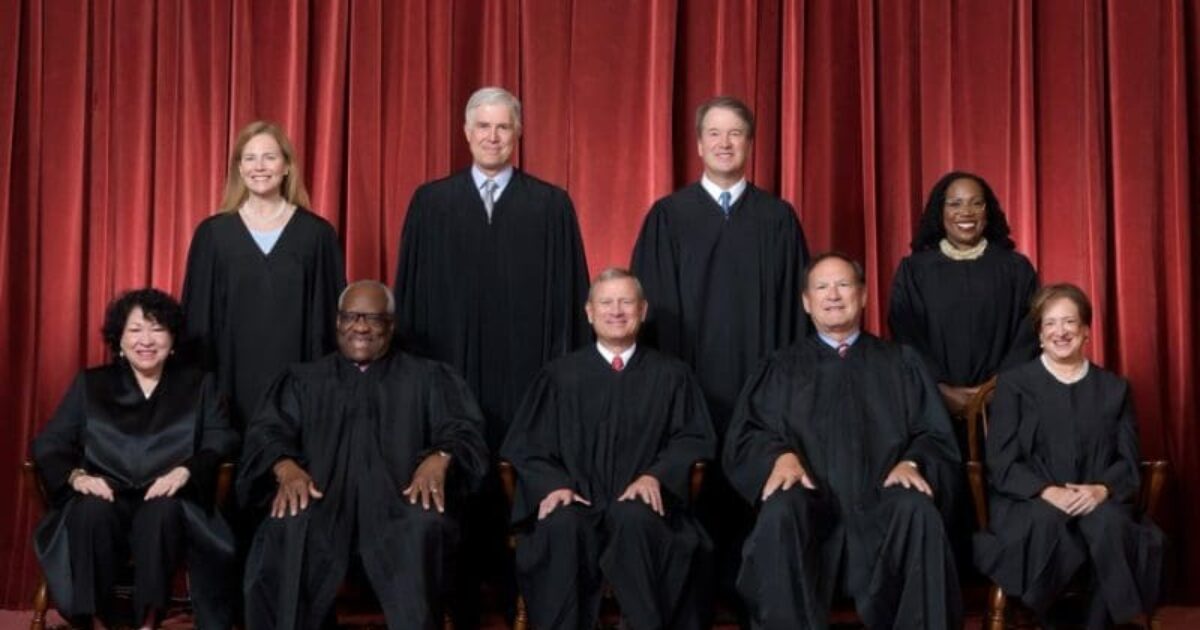
Chief Justice John Roberts, writing for the majority, made it clear: candidates have a “personal stake” in the rules governing their elections. This destroys the liberal argument that Republicans can’t sue unless they can prove a specific fraudulent ballot cost them the race.
Roberts wrote:
“He is a candidate for office. And a candidate has a personal stake in the rules that govern the counting of votes in his election.
An unlawful election rule can injure a candidate in several ways. It might cause him to lose the election. It might require him to expend additional resources.
Or it might decrease his vote share and damage his reputation. Respondents concede that each of these harms can be legally cognizable.
But they contend that Congressman Bost failed to adequately plead any such harm here. We need not resolve whether respondents are right, because winning, and doing so as inexpensively and decisively as possible, are not a candidate’s only interests in an election.
To start, candidates also have an interest in a fair process. Candidates are not common competitors in the economic marketplace. They seek to represent the people.”
Naturally, the liberal justices were in a meltdown. Justices Sonia Sotomayor and Ketanji Brown Jackson dissented, likely terrified that the days of the “election month” rather than Election Day are numbered.
14 states and Washington, D.C. allow ballots to be counted if they arrive after Election Day, provided they are postmarked on or before Election Day.
The following states accept ballots that arrive late, as long as they have a valid postmark:
Alaska
California
District of Columbia
Illinois
Maryland
Massachusetts
Mississippi
Nevada
New Jersey
New York
Oregon
Texas (Note: Must be received by 5:00 PM the day after Election Day)
Virginia
Washington
West Virginia
Note on Territories: Puerto Rico, the U.S. Virgin Islands, and Guam also typically accept late-arriving ballots if postmarked by Election Day.
Several states that previously accepted late-arriving ballots have recently passed laws requiring ballots to be in the hands of election officials by the time polls close on Election Day, regardless of when they were mailed.
Kansas (Changed in 2024/2025)
North Dakota (Changed in 2025)
Ohio (Changed in 2025)
Utah (Changed in 2025)
In all other states (e.g., Florida, Georgia, Michigan, Pennsylvania, Wisconsin, Arizona), your ballot must be received by the county election office by the close of polls on Election Day.
The post HUGE WIN FOR ELECTION INTEGRITY: Supreme Court Greenlights Lawsuits Against Late Mail-In Ballots — Opens Door to Nationwide Challenges to Democrat Schemes appeared first on The Gateway Pundit.