
By Becker1999 from Columbus, OH – 40IMG_0015, CC BY 2.0, https://commons.wikimedia.org/w/index.php?curid=149895524
Following the fatal self-defense shooting of Renee Good by ICE on January 7, 2026, activists established an autonomous zone in south Minneapolis near the shooting site at Portland Avenue and East 34th Street, roughly one mile from George Floyd Square. Protesters erected makeshift barricades spanning several blocks using trash bins, Christmas trees, and other debris. Signs declared, “Federal agents not permitted on premises. Federal agents (ICE, DEA, ATF, or any other agent or agency) may not enter, park, or stage on this property. No trespassing. Violators will be towed.” The zone blocked residents from driving through the area or accessing their homes, while radicals appointed “guards” at each entrance and declared the area a no-go zone for police.
The Twin Cities-based Autonomous Yurts Union delivered a yurt shelter around 4 p.m. on January 8 to provide cover from the rain for those manning the barricades. Minneapolis police removed the barricades early the next morning, January 9, around 3:40 a.m. Officers from the Fifth Precinct, wearing riot gear, demolished most of the obstructions, citing safety concerns and responding to repeated calls from residents. The city later placed traffic cones and yellow tape to allow vehicles to pass while keeping the memorial intact. Interim Fire Chief Melanie Rucker said, “Safety has to come first, every second matters when lives are on the line,” noting that blocked streets slow emergency response and limit access to critical resources. Officer Kelly O’Rourke added, “We’ve been through this before. These people don’t want to lose their home to permanent encampments.” The autonomous zone lasted one to two days.
Minneapolis has extensive experience with autonomous zones. After George Floyd’s murder on May 25, 2020, activists established an occupation at East 38th Street and Chicago Avenue that lasted more than a year. Dubbed the “Free State of George Floyd,” a sign at the entrance read, “You are now entering the Free State of George Floyd,” accompanied by the slogan “No justice, no street.” Resident-appointed “guardians,” described as predominantly white neighbors, manned barricades, controlled access, and coordinated selectively with emergency services while refusing police entry.
Crime surged in and around the zone. In March 2021, officers chasing a vehicle suspected in a shots-fired incident were ordered to abandon the pursuit after the suspects entered the area. Audio recordings captured a supervisor instructing officers not to follow suspects into the zone, even after the vehicle reached speeds of up to 70 miles per hour and ran red lights. In December 2020, police pursuing an armed carjacker into the area were surrounded by protesters who accused them of using excessive force. Then-Mayor Jacob Frey insisted in February 2021 that the square “is not an autonomous zone and will not and cannot be an autonomous zone,” a claim contradicted by conditions on the ground.
In 2020, there were 19 fatal and nonfatal shootings in the George Floyd Square area, compared to just three in all of 2019. On June 19, 2020, Dameon Chambers was fatally shot during a Juneteenth gathering. Victims were often carried to barricaded perimeters where evidence was destroyed by bystanders. Crime rose across Ward 8, and some church leaders warned that the occupation provided cover for illegal street gang activity. On March 6, 2021, another person was fatally shot inside the zone during an altercation. Streets were eventually reopened to traffic later that year.
Other U.S. cities experienced similar episodes of left-wing violence and territorial occupation. Seattle’s CHOP or CHAZ was established on June 8, 2020, after police abandoned the East Precinct, covering six city blocks in Capitol Hill. The zone lasted 23 days and ended on July 1, 2020, after multiple shootings killed 19-year-old Lorenzo Anderson and 16-year-old Antonio Mays Jr. Businesses were vandalized, fires were set, and residents were attacked. Seattle later agreed to a $3.65 million settlement with residents and businesses, including penalties for deleted city records, while total legal costs related to CHOP reached $12 million.
New York City saw the creation of a City Hall Autonomous Zone on June 30, 2020, where protesters established a “No Pig Zone,” erected barricades, blocked roads, and camped for a month before police cleared the area. The occupation coincided with the city cutting the NYPD budget by $1 billion and canceling a class of 1,163 police cadets. Washington, D.C., Portland, Philadelphia, Asheville, Atlanta, Richmond, and Nashville all saw attempted autonomous zones during the same period, most of which were quickly dismantled.
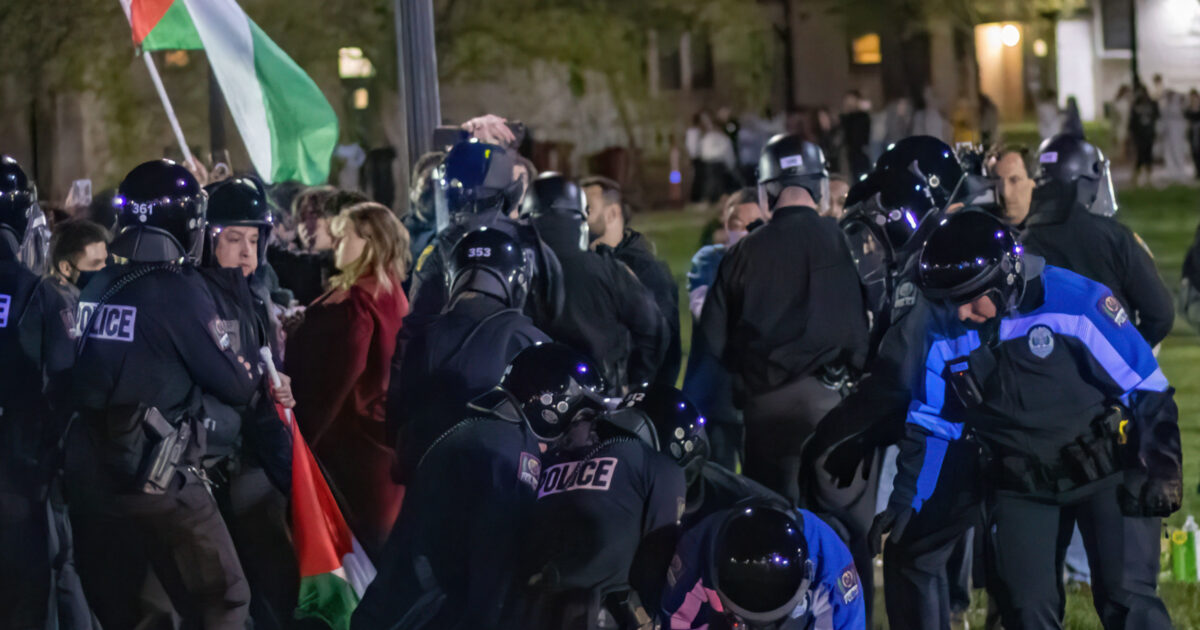
Along with the resurgence of autonomous zones is the occupation of university buildings. At Columbia University in early May 2025, 100 to 120 protesters pushed past Public Safety officers and occupied Butler Library’s main reading room, renaming it the “Basel Al-Araj Popular University.” Palestinian flags were displayed, and after roughly four hours the NYPD arrested 78 protesters. In July, Columbia disciplined at least 70 students through probations, suspensions, degree revocations, and expulsions. Similar actions followed at Bowdoin College, Barnard College, Swarthmore College, and Brooklyn College, where protesters declared yet another so-called “liberation zone.”
The post Autonomous Zones Are Back: The Left Up to Old Tricks, Rioting and Claiming Territory in U.S. Cities and Campuses appeared first on The Gateway Pundit.