
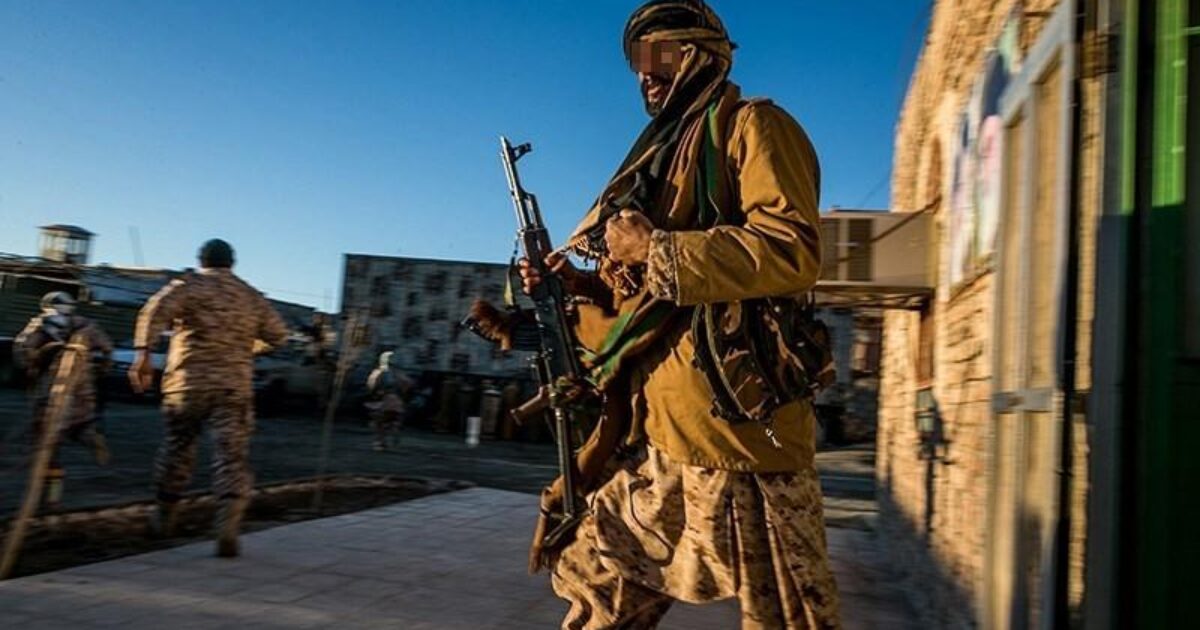
The Islamic Revolutionary Guard Corps (IRGC) is Iran’s most powerful military and security organization, separate from the regular armed forces. It reports directly to Supreme Leader Ayatollah Ali Khamenei and functions as the regime’s primary ideological enforcer and protector. Photo courtesy of Tasnim News Agency, CC BY 4.0, via Wikimedia Commons.
Protests in Iran, which have been ongoing for at least five days, turned deadly as unrest spread to at least 17 of the country’s 31 provinces on December 31. The Critical Threats Project at the American Enterprise Institute and the Institute for the Study of War recorded 31 separate demonstrations that day, up from 24 the previous day. The unrest reached the holy city of Qom, a core stronghold of the Islamic Republic, marking a significant symbolic breach.
The demonstrations erupted after Iran’s currency, the rial, plunged to record lows, sharply increasing inflation and living costs. What began with protests by shopkeepers at Tehran’s Grand Bazaar quickly spread to cities including Isfahan, Yazd, Zanjan, Kuhdasht, and Fasa.
As the unrest expanded, Iranian security forces escalated their response. Live ammunition was used to disperse protesters in Fasa and Kuhdasht, particularly in smaller and rural areas where the regime has historically struggled to maintain control, while water cannons were deployed against demonstrators in Hamedan and Arak despite Iran’s ongoing water crisis.
The violence turned deadly in several locations. In western Lorestan, state media reported that a 21-year-old member of the Basij paramilitary force was killed and 13 others wounded during clashes. At least one protester, 37-year-old Dariush Ansari Bakhtiarvand, was shot dead by security forces in Fooladshahr, Isfahan Province, with reports of additional fatalities in Lordegan. In southern Fars Province, security forces opened fire as protesters attempted to storm a government building, injuring several officers and leading to multiple arrests.
President Masoud Pezeshkian called for national unity and blamed foreign pressure for the unrest, framing the protests as economically driven by inflation and rising living costs and accusing “hostile elements” of exploiting public anger. At the same time, protest slogans reflected a clear shift from economic grievances to open rejection of clerical rule.
He described the situation as a “full-scale war” waged through economic pressure and urged solidarity. Government officials promised dialogue and acknowledged the right to peaceful assembly, even as Iran’s top prosecutor warned of a decisive response if the protests turned violent or threatened public order.
Demonstrators chanted “Death to the dictator,” referring to Supreme Leader Ayatollah Ali Khamenei, and “Neither Gaza nor Lebanon, my life for Iran,” criticizing the regime’s foreign policy priorities. Calls for resistance echoed across cities, with chants such as “Don’t be afraid, we are all together,” “Iranians, cry out, shout for your rights,” and “This is the year of blood, Seyed Ali will be overthrown,” directly invoking the name of Iran’s Ayatollah.
Pro-monarchy slogans featured prominently in protests across Iran, particularly in Qom. Protesters chanted “Long live the Shah” and voiced support for exiled prince Reza Pahlavi, with demonstrators in cities such as Dehloran and Baghmalek shouting “This is the national slogan: Reza Pahlavi” and “Javid Shah.” Some invoked Persian mythology, chanting “The Shah is coming home, Zahhak is overthrown.”
Reza Pahlavi is the son of the last Shah and heir to the defunct Peacock Throne. He lives in exile in the United States and has become increasingly vocal about supporting Iran’s opposition movements. Some Iranians, particularly monarchists, view him as a potential alternative to the current regime, though this represents only one faction within Iran’s diverse opposition.
Zahhak is a tyrant from Persian mythology in the Shahnameh, remembered as an illegitimate ruler who oppressed the people and fed on the lives of the young. By invoking Zahhak, protesters frame Supreme Leader Ayatollah Ali Khamenei and the Islamic Republic as unlawful rulers destined to be overthrown. The imagery draws on Iranian nationalism and pre-Islamic identity as a direct challenge to the regime’s ideological foundations.
Iranian opposition is fragmented across monarchists, secularists, leftists, and reformists with different visions for Iran’s future.
Human rights groups reported dozens of arrests across multiple provinces, including the transfer of six women detained in Tehran protests to Evin prison. The Intelligence Ministry also claimed to have detained individuals allegedly linked to Reza Pahlavi.
The regime moved to preempt further unrest at universities by ordering several institutions to shift to remote learning, officially citing cold weather. Analysts assess the move as an effort to disrupt student-led mobilization, given the central role students played in the Mahsa Amini protests of 2022–2023. Authorities simultaneously released a small number of detained students and dismissed some campus security officials, likely in an attempt to defuse tensions.
Amid the expanding unrest, Supreme Leader Ayatollah Ali Khamenei appointed Brigadier General Ahmad Vahidi as deputy commander of the Islamic Revolutionary Guards Corps (IRGC). Vahidi, previously sanctioned by the U.S. and EU for his role in suppressing protests, is trusted to manage domestic unrest. The appointment signals regime concern over internal security and reflects ongoing challenges in rebuilding Iran’s military leadership after the loss of senior commanders.
The unrest comes against a backdrop of long-running sanctions, renewed UN penalties, currency collapse, energy and water shortages, and memories of past crackdowns. Iran last saw nationwide protests in 2022 and 2023 following the death in police custody of 22-year-old Mahsa Amini, who was arrested for allegedly not fully following the country’s strict Islamic laws regarding headscarves. Those protests became the largest outbreak of unrest in Iran in years, with demonstrators across the country demanding an end to clerical rule. Hundreds of people were killed during the crackdown, including dozens of security force members.
More than 20,000 people were arrested, and several were executed in connection with the protests. The current demonstrations have quickly become the largest since the Mahsa Amini movement, with analysts noting deep public skepticism about the government’s ability to fix the economy and warning that protests rooted in economic grievances could evolve into broader political demands.
Nobel Peace Prize laureate Shirin Ebadi said she hopes 2026 will mark the end of the “Islamic Republic” label, citing executions, repression, and worsening conditions in 2025, while expressing optimism that the current protests reflect resilience and a push for lasting change. Israeli minister Gila Gamliel urged global support for Iranian demonstrators.
The post Iran Regime Kills Protesters as Unrest and Calls for Regime Change Spread Nationwide appeared first on The Gateway Pundit.