
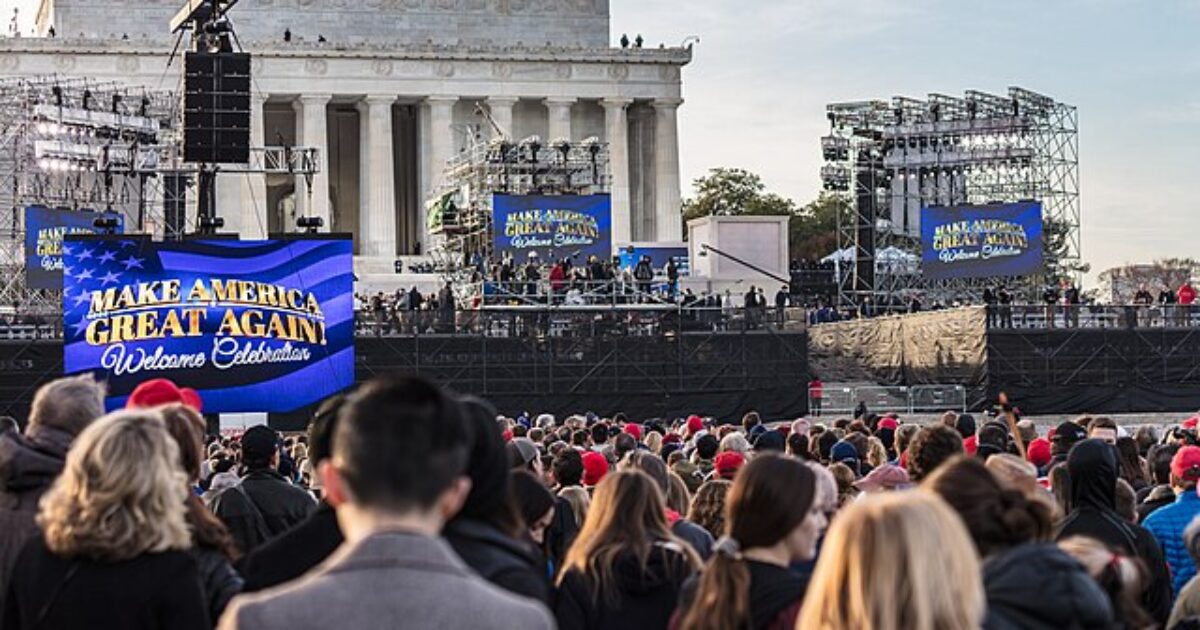
WATCH: America Keeps Asking: What Is MAGA?
Most commentary about MAGA reduces it to slogans, personalities, or media narratives. The result is a public conversation that never reaches the movement’s substance, even though the substance—not the theatrics—is what made MAGA the most influential force in American politics today.
The refusal to define its philosophy is deliberate. Once that philosophy becomes clear, the divide inside the GOP becomes impossible to ignore.
MAGA is not the Republican Party; it’s a worldview. The GOP is an institution.
One is bottom-up; the other is top-down.
One grows from citizens demanding accountability and national cohesion; the other grew around predictable networks, donors, and consultants.
Treating them as interchangeable only hides the real story of American politics: voters are not flocking to the GOP establishment. They are flocking to the ideas that MAGA revived.
Attorney and commentator David Pollack explains this dynamic better than most establishment figures are willing to. “The media treats it like a brand,” he wrote in a recent analysis. “Politicians treat it like a threat. And almost nobody explains what it actually represents.”
Pollack, who hosts The David Pollack Show, argues that MAGA “is a worldview rooted in the same ideas that shaped the American Revolution” and that it stands apart from “the European style of conservatism that protected hierarchies instead of citizens.”
His argument reflects what millions of voters already feel: MAGA resonates because its principles match America’s founding philosophy, not the modern GOP’s institutional habits.
Those principles are straightforward: citizens come first, borders matter, sovereignty matters. Rights come from God, not government. Communities and families need room to exist without constant pressure from centralized authority.
Government answers to the people, not the other way around. These ideas once defined American politics across parties. Today, they define the movement transforming the Republican Party from the outside in.
The GOP establishment was never built for that kind of realignment. Its incentives reward stability, predictability, and negotiated power.
MAGA demands accountability, disruption when necessary, and a renewed focus on the people who actually live in the country. This is why the two often clash.
The GOP relies on consultants; MAGA relies on voters. The GOP builds around institutions; MAGA challenges institutions that no longer function.
The GOP’s instinct is to manage politics. MAGA’s instinct is to change its direction.
Traditional GOP voters overwhelmingly support Donald Trump, but the deeper story is who is driving that support. Hispanic Republicans—long treated as unattainable by establishment strategists—now hold an 89% favorable view of Trump.
Younger conservatives gravitate toward the movement’s assertive leadership style. And across demographic groups, the philosophy behind MAGA consistently outperforms the more cautious, consultant-driven approach preferred by old-guard Republicans.
This pattern intensifies when examining New Entrant Republicans—voters who joined the GOP after 2016. They did not join because they were drawn to the party’s institutional identity. They joined because MAGA reframed the debate around sovereignty, fairness, borders, strength, and the idea that citizens—not bureaucracies—should define the country’s direction.
These voters are not loyal to the Republican Party as an institution. Only 56% say they will “definitely” vote GOP again. What they are loyal to is the philosophy that brought them into the coalition in the first place.
Pollack highlights why this shift is happening. In his words, “The people are sovereign, and the state answers to them.”
MAGA resonates because it restores a sense of meaning and hierarchy: citizens first, institutions second. The GOP establishment never fully adapted to that worldview. MAGA, however, made it nonnegotiable for winning national elections.
If the GOP wants to win, it must understand this reality. Elections are not being won on consultant talking points or legacy networks. They are being won because MAGA gives voters a clear, coherent worldview rooted in the country’s founding principles.
The post Talk Show Host David Pollack Defines: What Is MAGA? appeared first on The Gateway Pundit.